
Last updated October 17, 2026
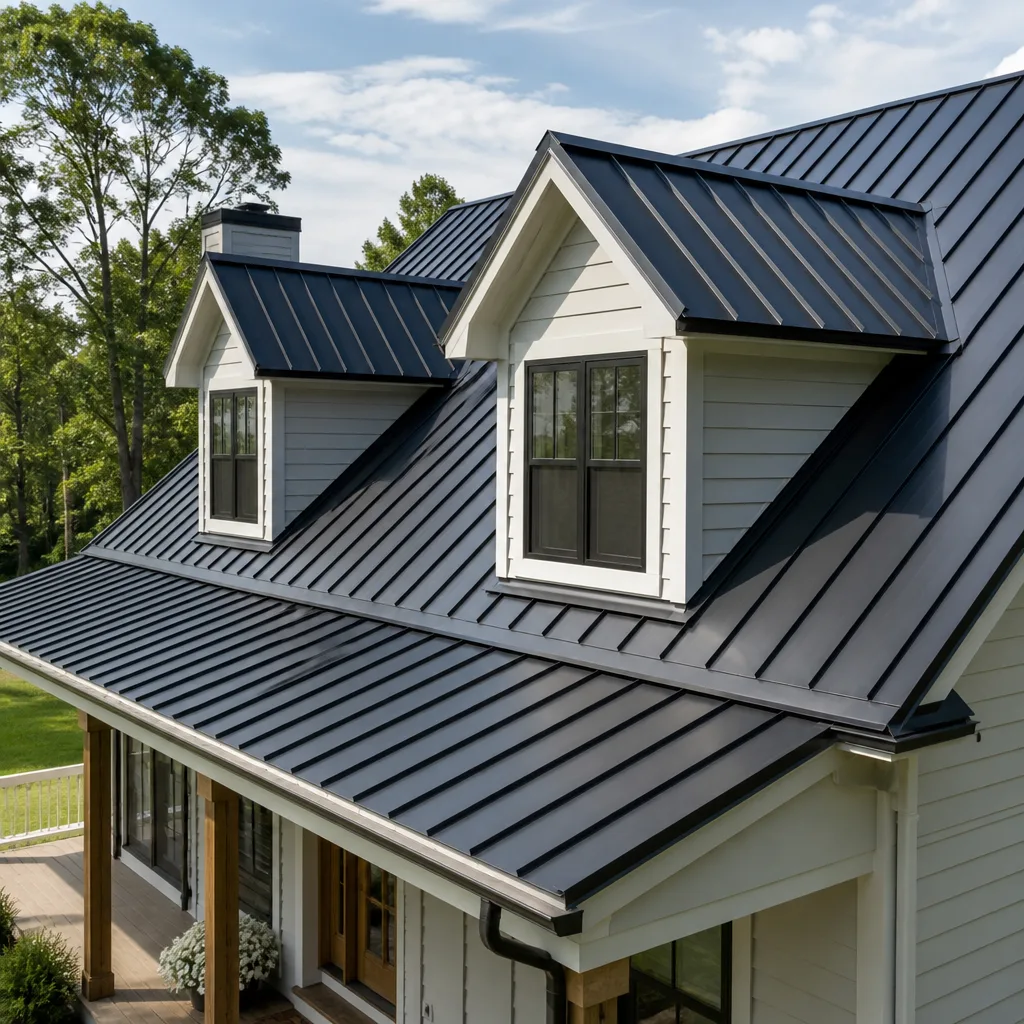 Metal roofing
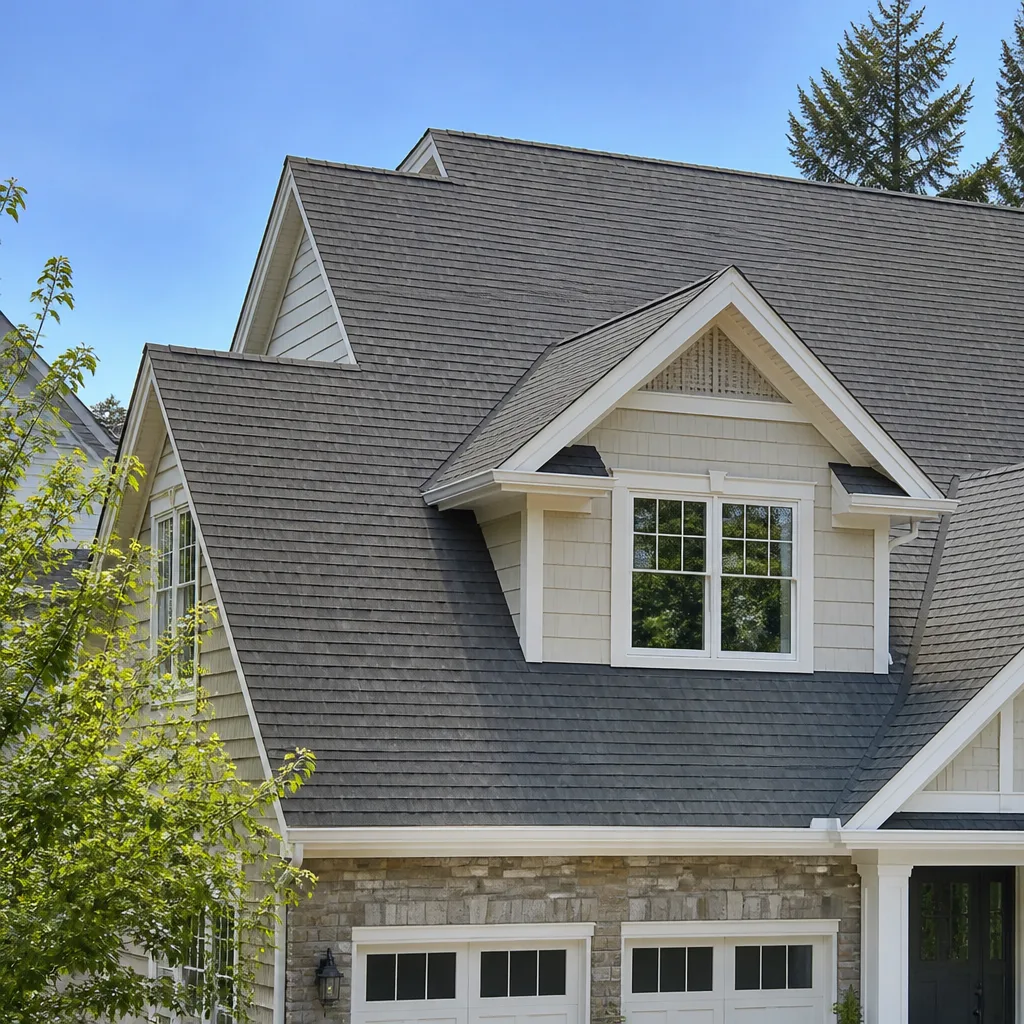 Architectural shingles
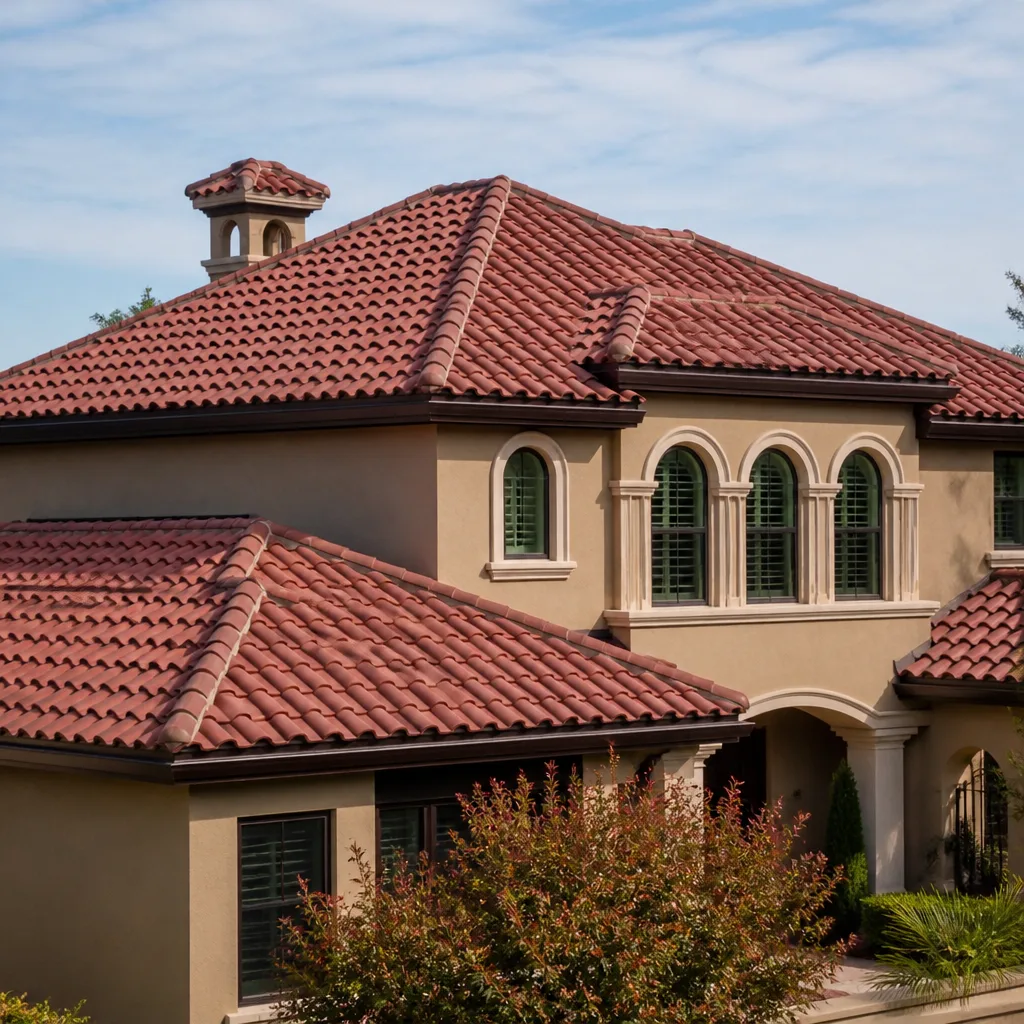 Tile roofing
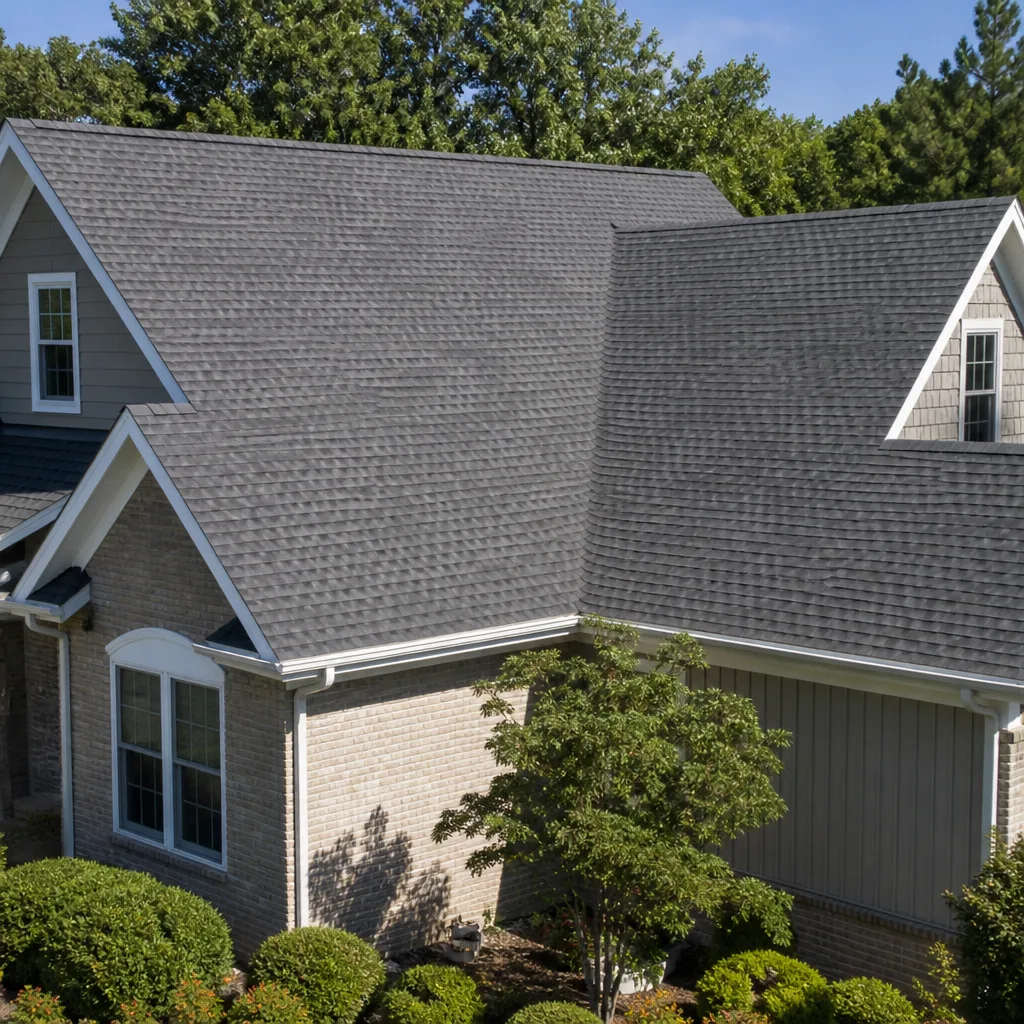 GAF
GAF Owens Corning
 Flat & low-slope
Free roof inspection with deck photos before we talk money - GAF and Owens Corning certified installation
The Complete Guide to Roofing in Jacksonville
Jacksonville averages 53 inches of rain per year, nearly a foot more than the national average, yet most roofing guides sold to Florida homeowners were written for climates that never see a named storm. That gap matters. A roof that performs in Ohio or Oregon will face conditions in Jacksonville it was never designed to handle: salt-laced wind off the Atlantic, clay soil that shifts under your foundation, and a hurricane season that tests every fastener, seal, and flashing detail. This guide connects every roofing decision you’ll make as a Jacksonville homeowner back to those local conditions, so you can choose materials, read estimates, and hire a contractor in Jacksonville with confidence. Along the way, we’ll share what we’ve seen in thousands of Jacksonville homes since Birchbark Roofing Jacksonville opened its doors, and what those observations mean for your roof.
Quick Answer
Roofing decisions in Jacksonville, Florida hinge on three local realities: salt air that corrodes fasteners and flashing faster than inland Florida, clay soil that stresses fascia and roof edges as it expands and contracts, and a hurricane exposure window that demands code-compliant wind-uplift ratings. The right Jacksonville roof pairs corrosion-resistant materials with proper ventilation and edge details designed for Duval County’s specific code requirements. Expect a written, line-item estimate before any work begins, and verify your contractor’s clean-up process before the crew arrives.
Styles & brands we work with
Table of Contents
- How Jacksonville’s Salt Air Changes What Goes on Your Roof
- Why Clay Soil Movement Stresses Fascia and Roof Edges
- Duval County Wind-Uplift Codes and What Big-Box Stores Don’t Tell You
- How to Read a Jacksonville Roofing Estimate Line by Line
- The Materials That Hold Up in Jacksonville’s Climate
- Written Protections: What Separates a Documented Job from a Handshake Job
- Questions Every Jacksonville Homeowner Should Ask Before Signing
How Jacksonville’s Salt Air Changes What Goes on Your Roof
Jacksonville sits roughly 12 miles inland from the Atlantic at its closest point, but the city’s geography creates a salt-corrosion profile that surprises homeowners. Northeast Florida’s prevailing onshore winds carry a fine aerosol of salt that doesn’t just settle on beachfront homes. It works its way inland through the St. Johns River corridor, across Arlington, down through San Marco, and into neighborhoods that never see the ocean. In our experience across Jacksonville, the telltale signs of salt corrosion are pitted flashing, rust rings around fastener heads, and metallic components that fail years before their rated lifespan.
Here’s what that means for your roof decisions:
- Fasteners matter more than shingles. A shingle might survive 20 years in Jacksonville, but the nail holding it down can rust through in 12. We specify corrosion-resistant fasteners, hot-dipped galvanized or stainless, on coastal-exposed faces and recommend them everywhere in Duval County. The cost difference is marginal. The lifespan difference is measured in years.
- Flashing is where salt air hits hardest. Drip edge, step flashing, pipe boots, and valley metal are the first components to show corrosion in Jacksonville. When you’re comparing estimates, ask what gauge and material the contractor uses for flashing. Thin aluminum flashing on an ocean-facing roof in Jacksonville is a planned failure.
- Manufacturer warranties have salt-exposure clauses. Some manufacturers limit coverage for homes within a certain distance of saltwater. Working with a contractor who understands these clauses, and who installs to coastal standards regardless of whether your specific street triggers the fine print, is the difference between a warranty that pays and a warranty that’s just a piece of paper.
We’ve worked on Jacksonville homes in Avondale and Riverside where the roof decking was sound but the flashing had corroded to the point of active leaks. The fix wasn’t a replacement roof. It was careful, methodical flashing replacement with materials suited to the salt exposure. Knowing the difference saves homeowners thousands. If you’d like us to assess your flashing and fasteners, we offer free estimates across Jacksonville, and you’ll get a written price before any work is scheduled.
Why Clay Soil Movement Stresses Fascias and Roof Edges
Jacksonville sits on a mix of sandy loam and, notably, expansive clay. That clay expands when it’s wet and contracts during dry spells. Over the course of a year, the ground under your home moves enough to create hairline shifts in the framing, and those shifts travel upward. The roof is the last stop for that movement, and the components that absorb it are the fascia boards, the soffits, and the roof edge.
Here’s how it shows up in Jacksonville homes:
- Fascia separation. The board that runs along the roofline pulls slightly away from the rafters. You’ll see a gap, often painted shut by a previous owner, that lets water into the eave. In Jacksonville’s climate, that water sits in the soffit and breeds rot faster than you’d believe.
- Roof-edge failure at the drip edge. When the roof edge shifts, the drip edge lifts. Water that was supposed to shed into the gutter now curls back under the bottom shingle. This is a leading cause of eave leaks in Jacksonville homes that are 15 to 25 years old.
- Nail pops along the perimeter. The movement walks nails out of the decking near the edges. Each nail pop is a potential leak point, and they cluster in the same zones where the fascia is stressed.
The fix isn’t always dramatic. In many Jacksonville homes, we address the problem by resecuring the fascia, replacing any rotted soffit sections, installing a proper drip edge, and re-nailing the perimeter shingles. The key is catching it before rot spreads into the rafter tails, at which point the repair scope grows significantly. This is why we recommend a roof inspection every few years in Jacksonville, even if you’re not seeing leaks. Small movement signs caught early are cheap to address.
Duval County Wind-Uplift Codes and What Big-Box Stores Don’t Tell You
The Florida Building Code assigns Duval County a wind speed requirement that sits between the higher-velocity zones of South Florida and the lower requirements of inland counties. In practical terms, Jacksonville is in a wind-borne debris region, which means your roof deck needs to be sealed to protect your home’s interior if shingles tear off during a hurricane. The Florida Building Code requires that new construction and roof replacements in Jacksonville include secondary water barrier protection at the deck level.
Specific requirements that affect Jacksonville homeowners:
- Nail pattern and count. The Florida Building Code specifies a minimum nail pattern for asphalt shingles in high-wind zones. Six nails per shingle, not four, becomes standard in portions of Duval County. Big-box stores sell shingles and nail guns without ever mentioning that code requires the tighter pattern in Jacksonville.
- Secondary water barrier. The code requires a sealed roof deck, usually achieved with a full peel-and-stick underlayment, on homes in wind-borne debris regions. This is the layer that keeps water out of your attic if the shingles blow off. Many handyman specials skip it because it doubles the underlayment cost. In Jacksonville, that’s a code violation and a future disaster.
- Roof-to-wall connections. When a roof is replaced, code requires that the roof be attached to the walls with hurricane straps or clips if they aren’t already in place. This matters for Jacksonville homes built before 1994, when the post-Andrew code changes took effect. A contractor who doesn’t check for existing straps, and doesn’t install them where missing, is leaving your roof vulnerable in the exact scenario Jacksonville homes face every storm season.
When you’re comparing estimates, ask specifically whether the quoted scope includes the secondary water barrier, six-nail patterns where required, and hurricane strap retrofit if needed. If a contractor can’t answer those three questions clearly, that’s your signal to keep looking. Our Roofing Company in Jacksonville page outlines our approach to code compliance on every job, and we’re glad to walk you through the specifics for your home’s age and location.
How to Read a Jacksonville Roofing Estimate Line by Line
Most roofing estimates hide more than they reveal. A single line that says “roof replacement” tells you nothing about what’s actually being installed. In a city like Jacksonville, where storm-chasers flood the market after every hurricane, the estimate itself is the first document that separates a real contractor from a chaser. Here’s how to read it.
The estimate you receive from any contractor in Jacksonville should include, at minimum, these line items:
- Tear-off and disposal. This should specify that the old shingles are removed down to the deck, not overlaid. Overlay is permitted in some cases, but it hides deck rot and adds weight. In Jacksonville, we recommend tear-off on every replacement. Ask for confirmation that the dumpster or trailer is included, and what happens to any debris that falls into your yard.
- Deck inspection and replacement. Rotted or delaminated decking replacement should be priced per sheet or per square foot, so you’ll know exactly what it costs if rotted wood is found. Some contractors write “decking as needed.” That’s a blank check. We write a unit price, so you know the math before we start.
- Underlayment and secondary water barrier. This is the line that separates Florida-correct roofs from everything else. It should specify a synthetic underlayment or peel-and-stick product, and it should align with Duval County’s wind-borne debris requirements. If the word “felt” appears without context, ask whether it meets current Florida code.
- Starter strip. This is a manufactured shingle, not a cut and flipped shingle, that seals along the roofline edges. It’s inexpensive and critical for preventing wind-driven rain intrusion. An estimate that doesn’t list starter strip separately is worth a hard conversation.
- Ice and water shield at penetrations. In Jacksonville, this self-adhering membrane goes around chimneys, skylights, and valley intersections. It’s not just for ice. It’s for the wind-driven rain that Jacksonville gets during coastal storms. This line should appear on every estimate.
- Code-compliant ventilation. Your estimate should reference intake and exhaust ventilation balanced to the attic space. In a hot, humid climate like Jacksonville’s, adequate ventilation extends shingle life and prevents moisture damage. A line that says “ventilation as needed” is not a ventilation plan.
We encourage homeowners to compare estimates line by line. It’s the only way to know whether you’re actually comparing the same roof. And remember: if a contractor won’t put their price in writing, with line items, before the job starts, walk away. A handshake isn’t a scope of work. We provide a written price on every job at Birchbark Roofing Jacksonville home, always.
The Materials That Hold Up in Jacksonville’s Climate
Jacksonville homeowners don’t need to overcomplicate material selection. The city’s climate narrows the right choices pretty clearly: you need products that resist salt corrosion, handle extreme heat and humidity, and meet Florida’s wind standards. Within those constraints, there’s still real variety based on your home’s style, your budget, and how long you plan to stay in the house.
Materials we recommend and install across Jacksonville include:
- Asphalt shingles from GAF and CertainTeed, in architectural profiles rated for high wind. These are the workhorse choice for most Jacksonville homes. Corrosion-resistant fasteners matter as much as the shingle. Look for algae-resistant formulations, because Jacksonville’s humidity and tree canopy create ideal conditions for moss and algae growth.
- Metal roofs with Boral or Tamko profiles where longevity is the goal. A standing-seam metal roof handles salt air better than asphalt, but it needs proper underlayment and fastener specification to perform. In coastal-adjacent Jacksonville neighborhoods, metal is a strong choice when the budget allows.
- Tile and slate profiles through Tamko for historic and Mediterranean-style homes. These are heavyweight systems that require structural verification. In Jacksonville neighborhoods like Avondale and Riverside, where historic aesthetics matter, tile is often the right answer when the structure supports it.
The best material conversation starts with your roof’s exposure. A house in Neptune Beach needs a different fastener spec than a house in Mandarin, even if they’re both installing the same shingle. That’s the kind of nuance you won’t get from a big-box store shelf. You get it from walking the roof with someone who knows Jacksonville. Our Roof Replacement in Jacksonville page covers material options and pricing ranges for full replacements, with written pricing before any commitment.
Written Protections: What Separates a Documented Job from a Handshake Job
Jacksonville sees more roofing contractors per capita than most American cities. The reason is simple: hurricanes generate demand, demand attracts chasers, and chasers leave homeowners with roofs that fail and no recourse. In that environment, the written protections on your job matter as much as the shingle brand.
Here’s what a documented job looks like, and the protections we put in writing on every Birchbark job:
- A written price in dollars before any work starts. Not an estimate range. Not a verbal agreement. A line-item price you can read before the crew arrives. In our experience, the contractors who won’t put numbers in writing are the ones who show up later with change orders.
- The 365-Day Done Right Promise. If the work isn’t right, we make it right. The guarantee is stamped on every job, and it’s not dependent on a manufacturer’s warranty or a weather event. We fix what we didn’t do correctly, period.
- Clean-up confirmation in writing, with a photo. Before the crew leaves your Jacksonville home, you’ll have a photo showing the completed clean-up. Shoe covers go at the door. Drop cloths go through the hallway. Debris is loaded and gone. If your kids play in the yard or your dog walks the fence line, you shouldn’t have to sweep for stray nails.
- The Cedarwell Care Promise. Since 2000, we’ve been part of the Cedarwell family of independently owned and operated roofing businesses. The Care Promise is our operating standard: Clean up like it is our own home; Ask before we move or touch anything; Respect the family’s time and quiet hours; Explain the price before the work.
In a market with high storm-chaser activity, the difference between a roofer who writes everything down and a roofer who works on a handshake is the difference between a warranty that’s actionable and a phone number that doesn’t ring after the truck leaves. Written protections aren’t a nice-to-have. They’re the bare minimum for a Jacksonville roofing decision.
Questions Every Jacksonville Homeowner Should Ask Before Signing
Most roofing problems in Jacksonville start with unasked questions. The contractors know what’s coming; the homeowner doesn’t know to ask. Here are the questions that make the difference between a roof that performs for 25 years and a roof that fails in five.
- “Will you put the full scope and price in writing before the job starts?” If the answer is anything other than yes, you’re not hiring a roofer. You’re hosting a negotiation.
- “Does your quote include the secondary water barrier required by Florida code?” In Duval County, this isn’t optional. A contractor who doesn’t include it isn’t doing Florida-compliant work.
- “What fastener material are you using on my roof?” In Jacksonville’s salt air, this single specification can mean the difference between a 25-year roof and a 15-year roof. The right answer mentions corrosion resistance or hot-dipped galvanized or stainless steel.
- “How will you protect the inside of my home during tear-off and installation?” This question tells you more about a contractor than any review. The right answer names specific actions: shoe covers, drop cloths, daily clean-up, debris management. A blank stare is your exit cue.
- “What happens if you find rotted decking?” A good contractor has a unit price, tells you before they replace any wood, and documents it with photos. If the answer is “we’ll figure it out,” you’ve just found your future change-order surprise.
- “Who handles the permit and inspections?” In Jacksonville, roofing permits are required for most replacements. The contractor you hire should pull the permit and coordinate the inspections. If they suggest you handle it, that’s a red flag.
Common Mistakes to Avoid
- Choosing a roof based on national reviews instead of Jacksonville conditions. A roofer with thousands of five-star reviews in Arizona may have never touched a salt-corroded fastener or pulled a Duval County permit. Jacksonville is a specific market. Hire for local experience.
- Skipping the secondary water barrier to save money. It’s the difference between an attic that stays dry during a hurricane and an attic that rains from below. Duval County code requires it. A contractor who suggests skipping it is telling you they don’t follow code.
- Overlaying shingles instead of doing a full tear-off. An overlay hides rotted decking, adds weight your framing wasn’t designed for, and shortens the new roof’s lifespan. In Jacksonville’s humidity, the trapped moisture under an overlay is a mold invitation.
- Ignoring ventilation. A hot, humid attic destroys shingles from below and creates moisture problems that show up as mold on the interior. Jacksonville homes need balanced ventilation, period. A roof without it is a box with no air exchange.
- Not getting a written price. In our market, the contractors who avoid written pricing are usually the ones who show up with change orders after the deck is exposed. The estimate is your contract. Get it in writing.
- Choosing materials without considering salt exposure. That cheap flashing from the hardware store won’t survive five years on a Jacksonville ocean-facing roof. The right metal spec is a corrosion-resistant product, and it costs a few dollars more per foot. That’s a bargain.
- Hiring without asking about clean-up. Roofing debris is a gift that keeps on giving: nails in the yard, granules in the garden, shingle pieces in the gutter. A contractor who doesn’t have a documented clean-up process will leave your yard worse than they found it.
See the difference
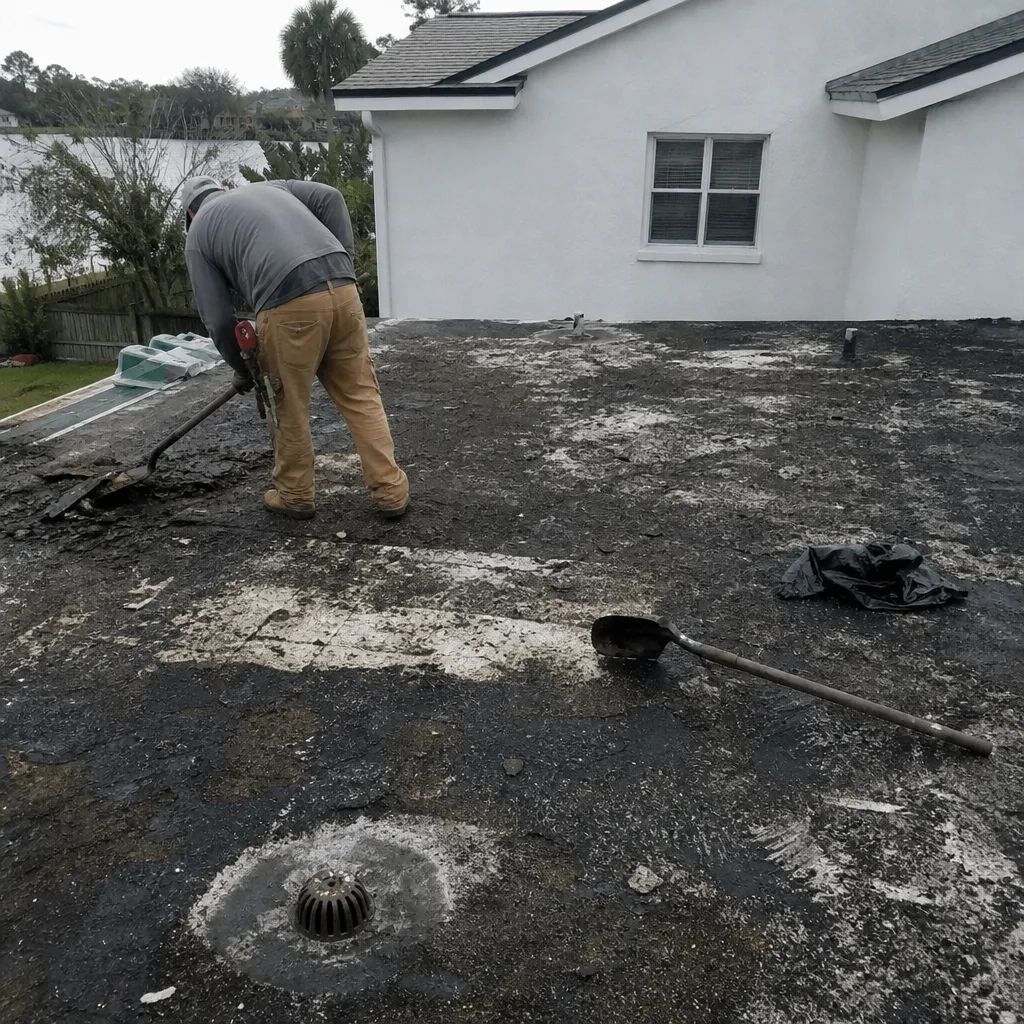 Before
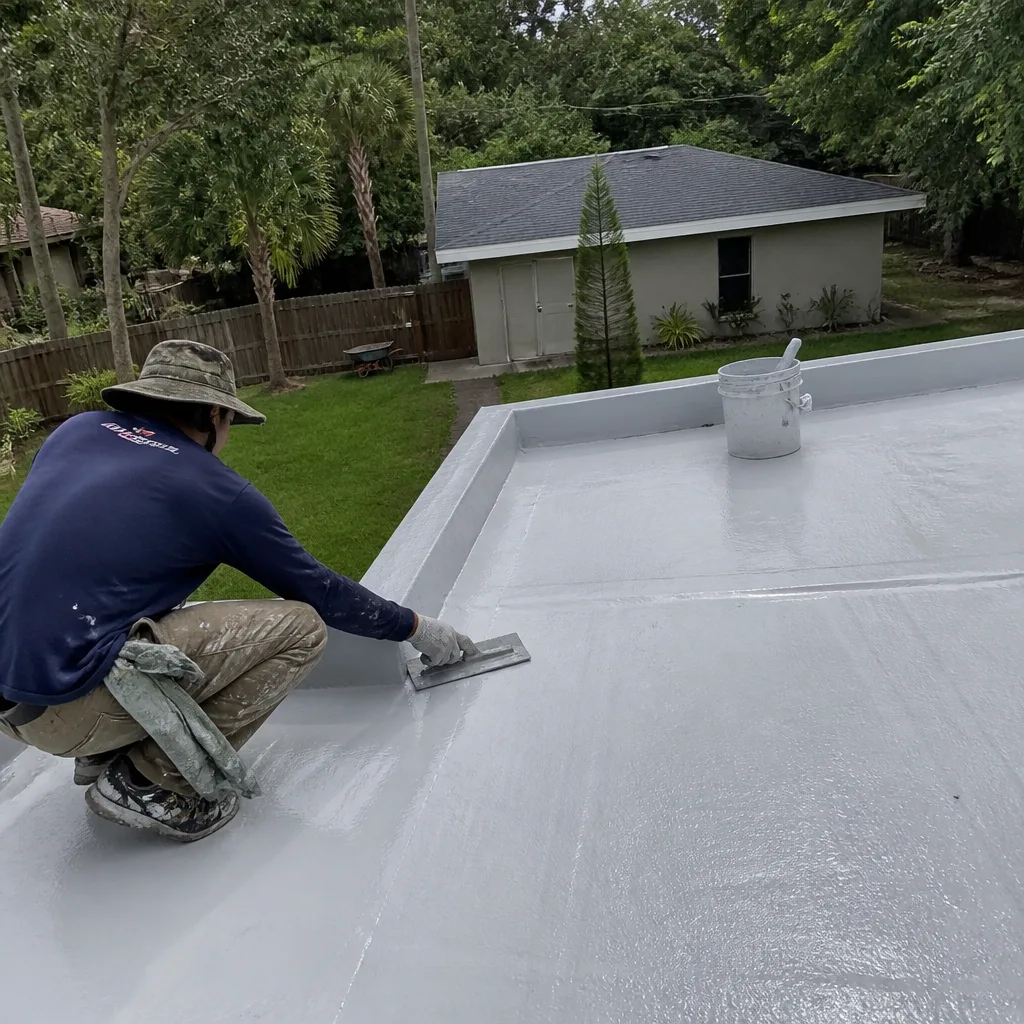 After
After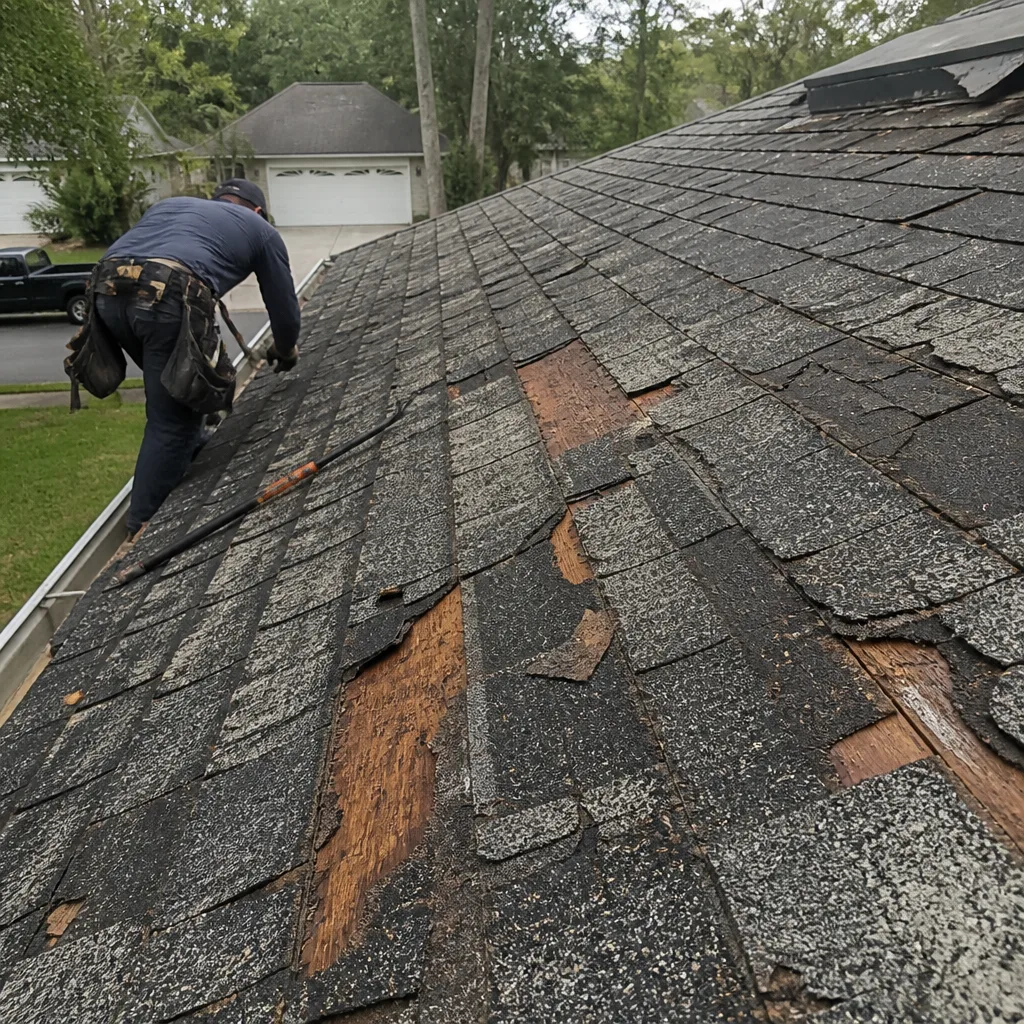 Before
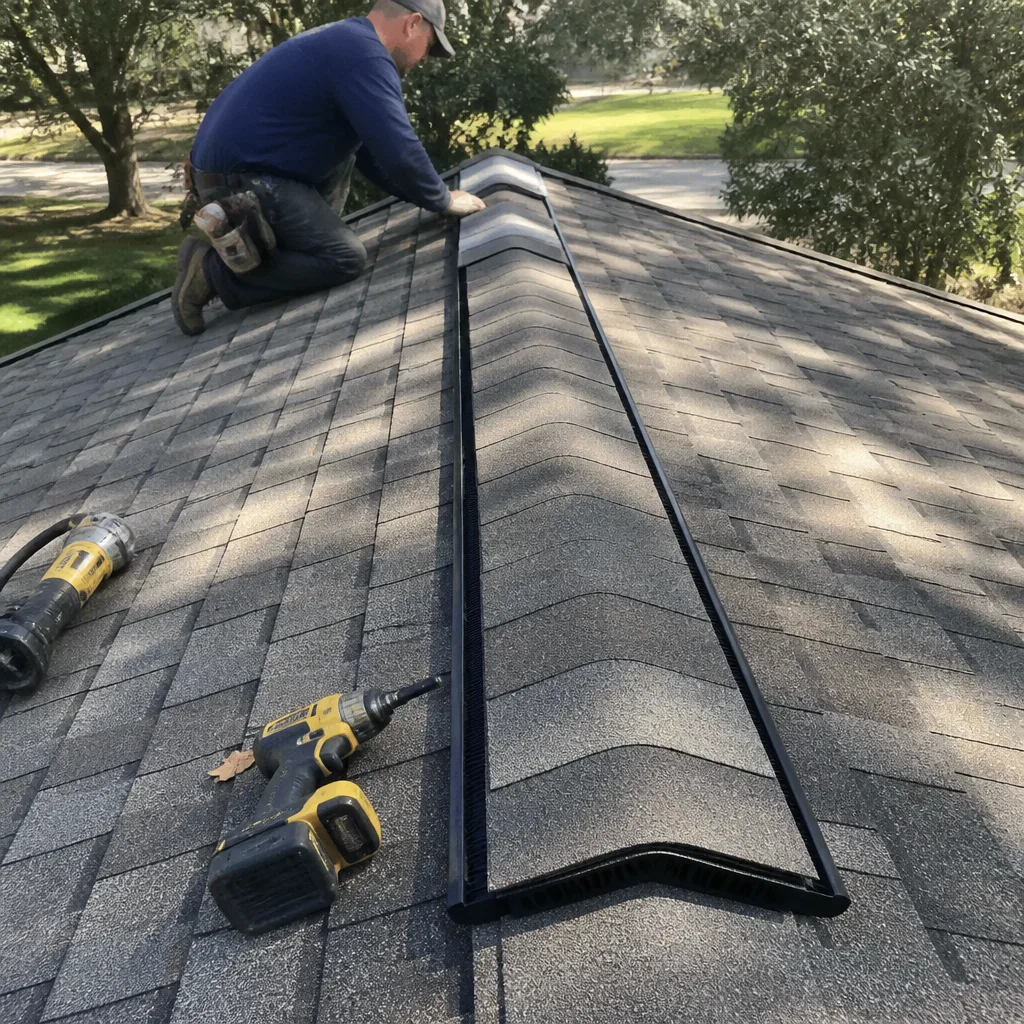 After
After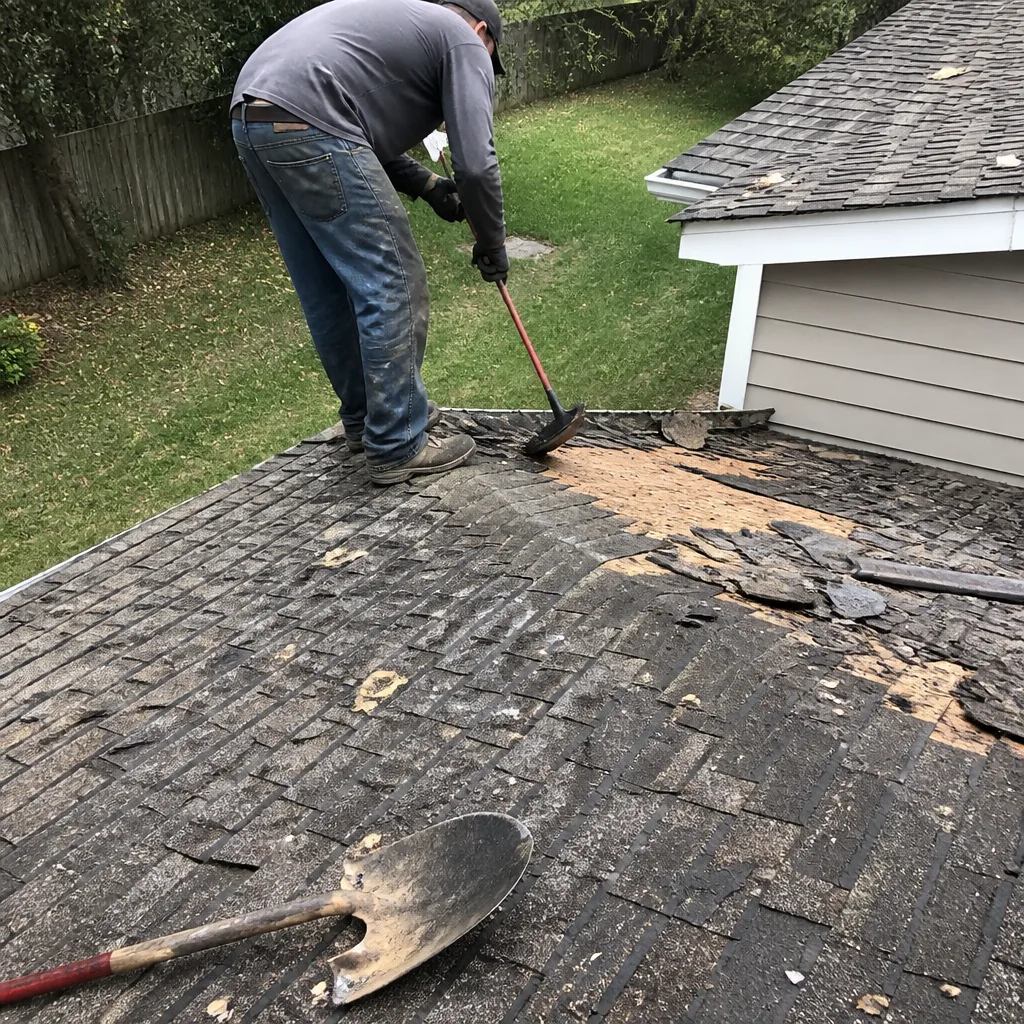 Before
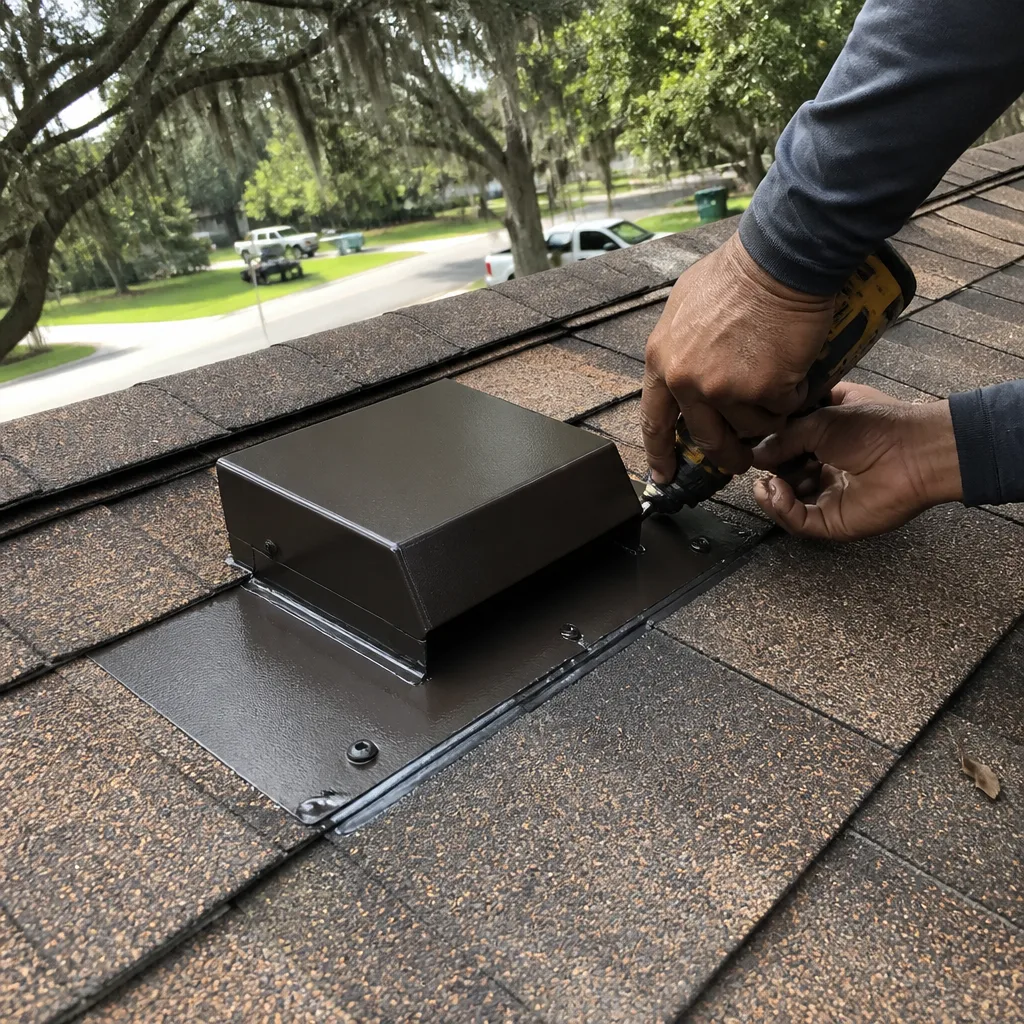 After
AfterWhen to Call a Professional
Some roofing issues are obvious: water coming through the ceiling, shingles missing after a storm, a sagging roofline. Others are quieter: granule loss in the gutters, a few lifted shingles near the edge, a persistent musty smell in the attic. In Jacksonville, the quiet signs matter more. Salt corrosion and clay-soil movement don’t announce themselves with a crash. They work slowly, and by the time you see the ceiling stain, the damage has been underway for months. If you’re seeing any of those signs, call a professional. Birchbark Roofing Jacksonville offers free estimates in Jacksonville – call (904) 604-7914 and we’ll walk your roof, document what we find, and give you a written price before any work begins. Erik Lindgren leads our team, and the estimate you get is the price you’ll pay, with the 365-Day Done Right Promise behind it.
Frequently Asked Questions
Most full roof replacements in Jacksonville run between $9,000 and $18,000 for a typical single-family home, depending on the roof’s complexity and the materials selected. The range varies based on tear-off conditions, underlayment requirements, decking condition, and the specific manufacturer you choose. Call (904) 604-7914 for an exact written quote – estimates are free.
Emergency repairs for active leaks are often possible same-day or next-day, especially if you’re dealing with storm damage. A full replacement is a multi-day project that requires permitting, material delivery, and scheduled installation. We answer the phone live 24/7, so call (904) 604-7914 and we’ll tell you honestly whether your situation is an emergency repair or a planned project.
Yes, Duval County falls within Florida’s wind-borne debris region, which requires a sealed roof deck using a secondary water barrier such as peel-and-stick underlayment. The code also specifies nail patterns and roof-to-wall connection standards that differ from what you’ll find in a big-box store handbook. Any Jacksonville roofing contractor should be able to explain these requirements for your home’s age and construction.
Jacksonville’s clay soil expands and contracts throughout the year, shifting the home’s framing enough to stress fascia boards and roof edges over time. Combined with the humidity that accelerates rot in any exposed wood, this makes the roof perimeter one of the most common failure points in Jacksonville homes. A Roofing Company Maintenance Checklist for Jacksonville Homeowners helps you catch these issues before the damage spreads into the rafter tails.
Metal roofs with corrosion-resistant fasteners and proper underlayment handle Jacksonville’s salt air best, followed by architectural asphalt shingles with stainless or hot-dipped galvanized fasteners. The fastener spec matters as much as the material itself. A tile or slate roof through a manufacturer like Tamko also performs well when the structure is verified to support the additional weight.
It shouldn’t, if your contractor uses unit pricing for rot replacement and puts everything in writing up front. Decking replacement is the most common reason prices change mid-job, and a good contractor will tell you the per-sheet cost before tearing anything off. We write the unit price into your estimate, so you’ll know the math before we start.
The Bottom Line
Jacksonville homeowners face roofing conditions that generic guides miss: salt air that eats fasteners, clay soil that stresses roof edges, and a building code designed for hurricane-force wind. The right roof for your home pairs corrosion-resistant materials with code-compliant underlayment and ventilation, and it starts with an estimate you can read line by line. For more guides & resources on protecting your Jacksonville home, explore our blog. The right contractor puts every protection, the price, the warranty, the clean-up, in writing before any work starts. That’s how we’ve done it at Birchbark Roofing Jacksonville since 2000, and it’s how we’ll do it on your home. Call (904) 604-7914 to schedule your free estimate, and you’ll have a written price in hand before anyone climbs on your roof.
Written by Erik Lindgren, Owner at Birchbark Roofing Jacksonville, serving Jacksonville since 2000.